
US grocery prices rose 0.7% in April, the sharpest monthly increase in nearly four years, while food-at-home prices were 2.9% higher year-on-year. Fresh vegetables were up 11.5% from a year earlier. Beef and veal were up 14.8%. Tomatoes were up almost 40%.
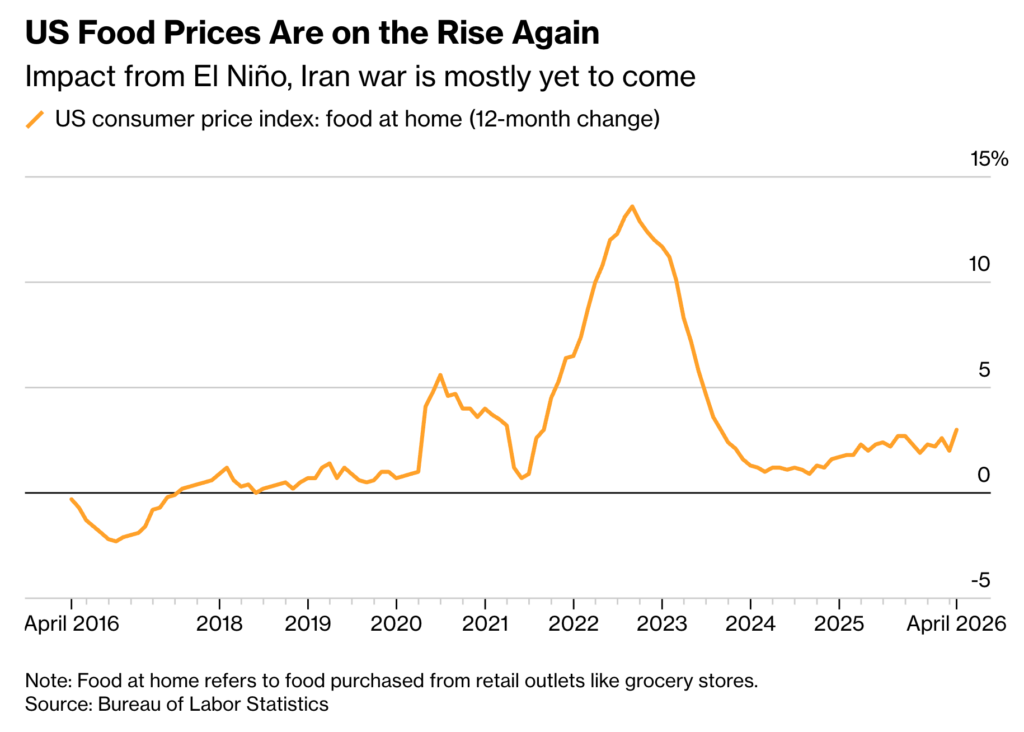
And this is before the next shock fully lands as the global food system is being hit from three directions at once: weather, war and energy.
The first problem is weather. The US has already seen extreme heat, frost, hail, wildfires and drought this year. Bloomberg reported that the US had its warmest start to the year on record, with temperatures running around 6°F above average through April. Drought now covers around 70% of US winter wheat production and 25% of corn production.
The second problem is El Niño. Forecasters now expect an El Niño pattern could emerge by August and persist into 2027. That matters because El Niño does not just move rainfall around. It can disrupt rice, coffee, cocoa, sugar and grain markets across Asia, Africa and Latin America. In a tight market, weather becomes price.
The third problem is energy, as a food price shock is rarely just about food. It is diesel for tractors, natural gas for fertiliser, fuel for trucks, plastic for packaging, shipping costs for imports, cold storage, processing, and much more. Every layer of the food chain has an energy price inside it.
And, with the Strait of Hormuz closed, global energy supplies are tightening.
The World Bank now expects fertiliser prices to rise 31% in 2026, driven by a 60% jump in urea prices, with fertiliser affordability falling to its worst level since 2022. That hits farmers before it hits supermarket shelves. Less fertiliser means lower yields. Higher fertiliser means higher crop costs. Either way, food gets more expensive.
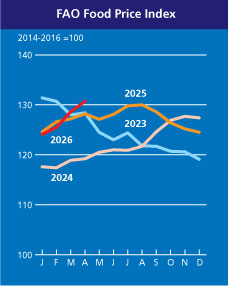
The FAO Food Price Index rose for a third straight month in April, reaching 130.7 points, up 1.6% from March. Vegetable oils, meat and cereals all moved higher. The index remains below the 2022 peak, but the direction has changed. The disinflation window is closing.
US officials still expect grocery inflation to remain manageable. The USDA’s May forecast projects food-at-home prices rising 3.2% in 2026. But that forecast already sits above the 20-year historical average of 2.6%, and Bloomberg cited economists warning grocery inflation could run closer to 4% to 4.5% if the current pressures persist.
The risk is not one bad harvest. The risk is a stack of shocks: drought in wheat country, El Niño across tropical crops, a smaller US cattle herd, tariffs on imported produce, expensive diesel, expensive fertiliser and a war premium embedded in shipping.
Food inflation is slow moving. That makes it dangerous: gasoline prices can fall quickly if oil markets calm down. Food prices do not reset the same way. Planting decisions are made months before harvest. Herds take years to rebuild. Fertiliser cuts show up later in yields. Weather damage cannot be reversed by a central bank.
The market has been trained to think inflation is cooling. Food is warning the opposite.
The next inflation wave may not start at the Fed. It may start in the field.