

📌 Key Takeaways
- Nickel prices hit a nine-month high as Indonesia signals material supply cuts and delays mine approvals.
- Indonesia controls ~50% of global nickel supply, giving policy shifts outsized market impact.
- EV and stainless steel supply chains face renewed volatility just as inventories begin to tighten.
Nickel prices surged to a nine-month high in late December after Indonesia signaled fresh supply discipline, reversing years of unchecked output growth that crushed prices and margins. The catalyst: Vale Indonesia halted part of its nickel mining after authorities delayed approval of its 2026 work plan, underscoring how regulatory risk is back in play for the world’s dominant producer.
Bloomberg reported the halt removed near-term supply from an already tightening market, adding to price momentum as traders reassessed Indonesian policy risk.
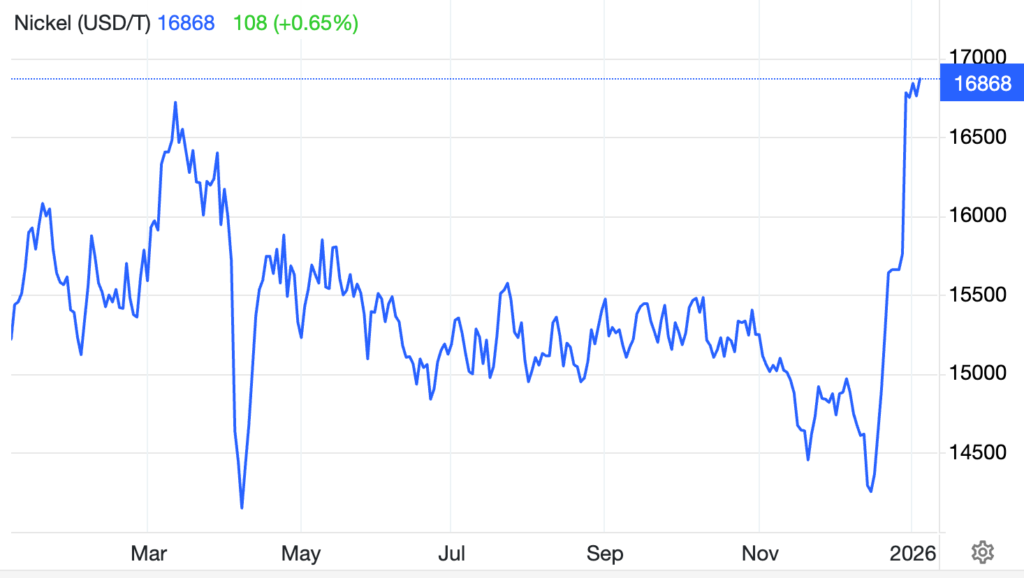
📉 Market context: Nickel had been one of the worst-performing battery metals of 2024–25 after Indonesia’s rapid capacity build flooded the market. That cycle is now turning.
Indonesia pivots from volume to value
Indonesia accounts for more than half of global mined nickel supply, a position built through aggressive investment in laterite mining and smelting. But Jakarta is now openly discussing output controls, tighter work-plan approvals, and policy shifts aimed at price stabilization and fiscal discipline.
S&P Global notes policymakers are weighing production cuts and stricter oversight to curb oversupply and protect state revenues, even at the risk of short-term volume losses.
These signals were enough to push nickel prices sharply higher, with traders pricing in reduced ore availability and slower growth in nickel pig iron and matte output.
Why this matters for EVs and stainless steel
Nickel demand remains structurally tied to two pillars: stainless steel and electric-vehicle batteries. While EV demand growth slowed in 2024, forecasts still show rising nickel intensity in high-nickel cathodes over the medium term. Any sustained Indonesian supply restraint tightens the forward balance just as inventories normalize from record highs.
For EV manufacturers and battery makers, Indonesia’s pivot raises cost uncertainty and reinforces the strategic risk of over-reliance on a single jurisdiction. For miners outside Indonesia, it reopens the investment case that was effectively closed during the oversupply phase.
The bigger picture: policy risk is back for nickel
Indonesia’s nickel strategy is evolving from expansion at any cost to managed scarcity. The Vale Indonesia halt is a reminder that regulatory approval — not geology — is now the binding constraint. For investors, the signal is clear: nickel is no longer just a demand story. It is a policy-driven market again, with Jakarta holding the lever.
If output cuts move from rhetoric to enforcement, the recent price spike may prove less a short-covering rally — and more the first chapter of a tighter nickel cycle.