

📌 Key Takeaways
- Japan’s largest nuclear plant is moving toward restart after regulators cleared final safety hurdles, a decade after Fukushima.
- Kashiwazaki-Kariwa alone could supply 7% of Japan’s electricity once fully operational, materially reducing LNG and coal burn.
- Japan remains one of the world’s largest uranium importers, so reactor restarts translate directly into long-term uranium demand.
- The move reinforces a global nuclear restart narrative, tightening an already constrained uranium market.
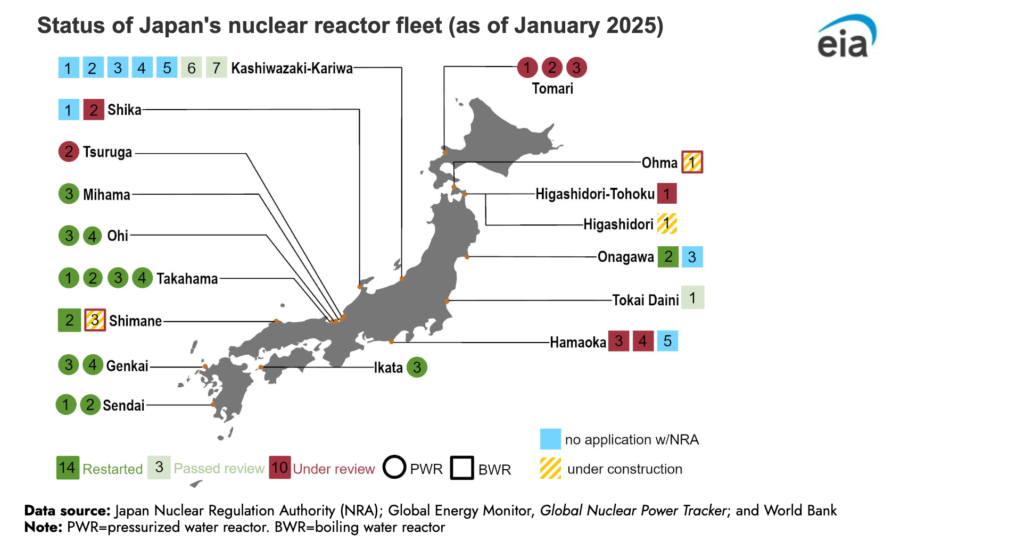
Japan’s — and the world’s — largest nuclear power station, Kashiwazaki-Kariwa Nuclear Power Plant, has received approval to restart operations as early as this week after regulators lifted a final safety restriction.
The plant, operated by Tokyo Electric Power Company (TEPCO), has been offline since 2011 following the Fukushima disaster. Japan’s Nuclear Regulation Authority has now approved corrective measures tied to anti-terrorism safeguards, removing the last formal obstacle to restarting Unit 7, a 1.35-gigawatt advanced boiling water reactor.
TEPCO confirmed that preparatory work is complete and that it will proceed in line with regulatory approvals and local consent.
☢️ Why Kashiwazaki-Kariwa matters for Japan’s energy mix
With a combined capacity of roughly 8 gigawatts across seven reactors, Kashiwazaki-Kariwa is the largest nuclear power plant in the world by output capacity. Before Fukushima, nuclear supplied around 30% of Japan’s electricity. Today, that figure is closer to 8%, forcing Japan to rely heavily on imported LNG and coal.
Restarting even a single unit has outsized impact. Once fully operational, the plant could cover roughly 7% of national electricity demand, reducing fuel imports and emissions while improving energy security, a strategic priority for Japan amid volatile global energy markets.
- Japan is the world’s second-largest LNG importer.
- Nuclear restarts directly displace gas and coal generation.
- Policy momentum has shifted firmly toward nuclear as a baseload solution.
⛏️ What this means for uranium demand
Japan’s annual uranium requirements were up to 8000 tU prior to the Fukushima accident and normally met from Australia (about one-third), Canada, Kazakhstan and elsewhere.
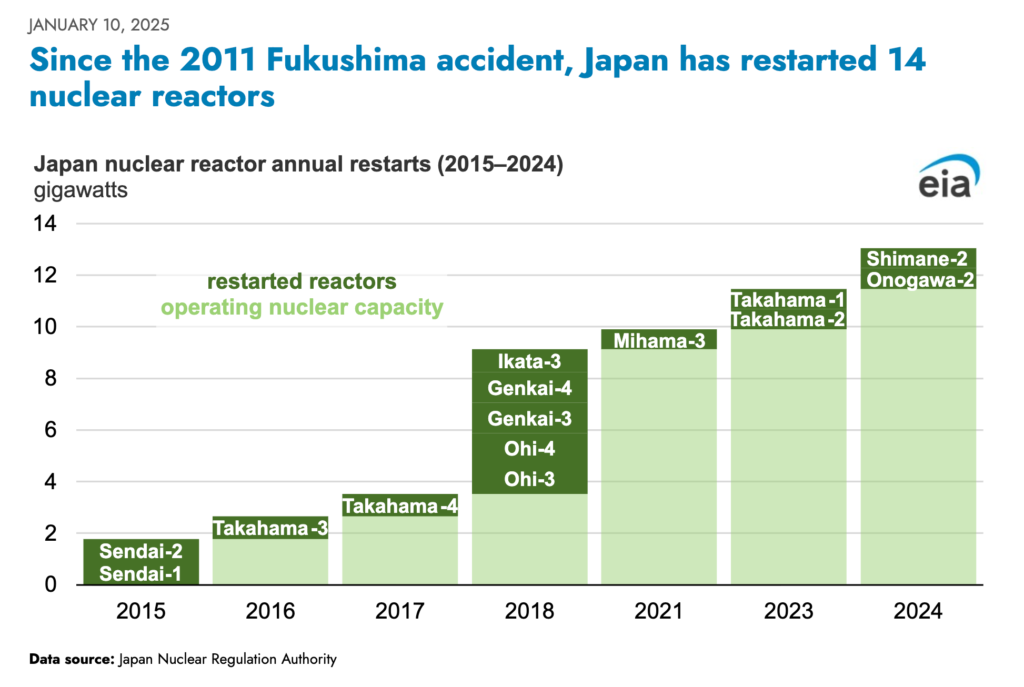
For uranium markets, the significance is straightforward: reactors consume fuel predictably and over decades.
Japan holds significant uranium inventories built up during the post-Fukushima shutdown period, but sustained restarts shift the country back into long-term contracting mode, not spot buying. Utilities typically lock in uranium supply years in advance, supporting price visibility for miners and converters.
According to Reuters, Japan aims to restart as many as 17 reactors under its revised energy plan. Each additional restart compounds demand in a market already tightened by underinvestment, geopolitical supply risks, and growing nuclear build-outs in China, India, and the Middle East.
📡 A signal beyond Japan
The Kashiwazaki-Kariwa decision is not just a domestic energy story. It is another data point in a broader global reset: nuclear is being re-embraced as a strategic asset for decarbonisation and energy security.
For uranium investors, the message is consistent. Demand is becoming more visible, more policy-backed, and more durable, while supply remains slow to respond. Japan’s largest reactor restarting after 15 years offline underscores how quickly sentiment — and fundamentals — can shift.